
Travel Guide
These Are The Top 5 Safest Countries In Europe For 2026 According To Security Experts
Dec
If you’ve visited any major European city in recent years, you’ve probably noticed things aren’t quite the way they used to be.
Between maintaining a state of hyper-vigilance in public, watching out for pickpockets, and avoiding certain neighborhoods, particularly at night, it’s not all fairytale castles and postcard-ready cobbled streets in the Old Continent.
This year, Le Monde reported on the UK’s ‘alarming’ number of knife attacks. In France, even the Secretary General of the National Police Commissioners’ Union admitted there’s been a significant decrease in the quality of life, and insecurity is to blame.
Not even Sweden, formerly one of Europe’s least-contentious states, was spared: the once-peaceful Scandinavian country, where violent crime was the rare exception, rather than daily news, now struggles with the rise of gangs and teen violence.
So in which countries in Europe do tourists feel safer, and what can we learn from them?
These Are The Top 5 Safest Countries In Europe

According to the latest HelloSafe Safety Index, these 5 European countries offer the least danger to visitors (and locals alike).
They boast robust public safety and low crime, two factors they deem as the ‘foundation’ of physical security, political and social stability (something countries like France and Italy can only aspire to), health and healthcare security, digital safety, and natural risk management.
They are:
- Denmark
- Finland
- Norway
- Switzerland
- Iceland
But what exactly makes these European states so safe, and how have they managed to keep crime levels lower than average when much of the continent keeps seeing worsening trends? Let’s start with Denmark:
Denmark
Safety Index: 89.95
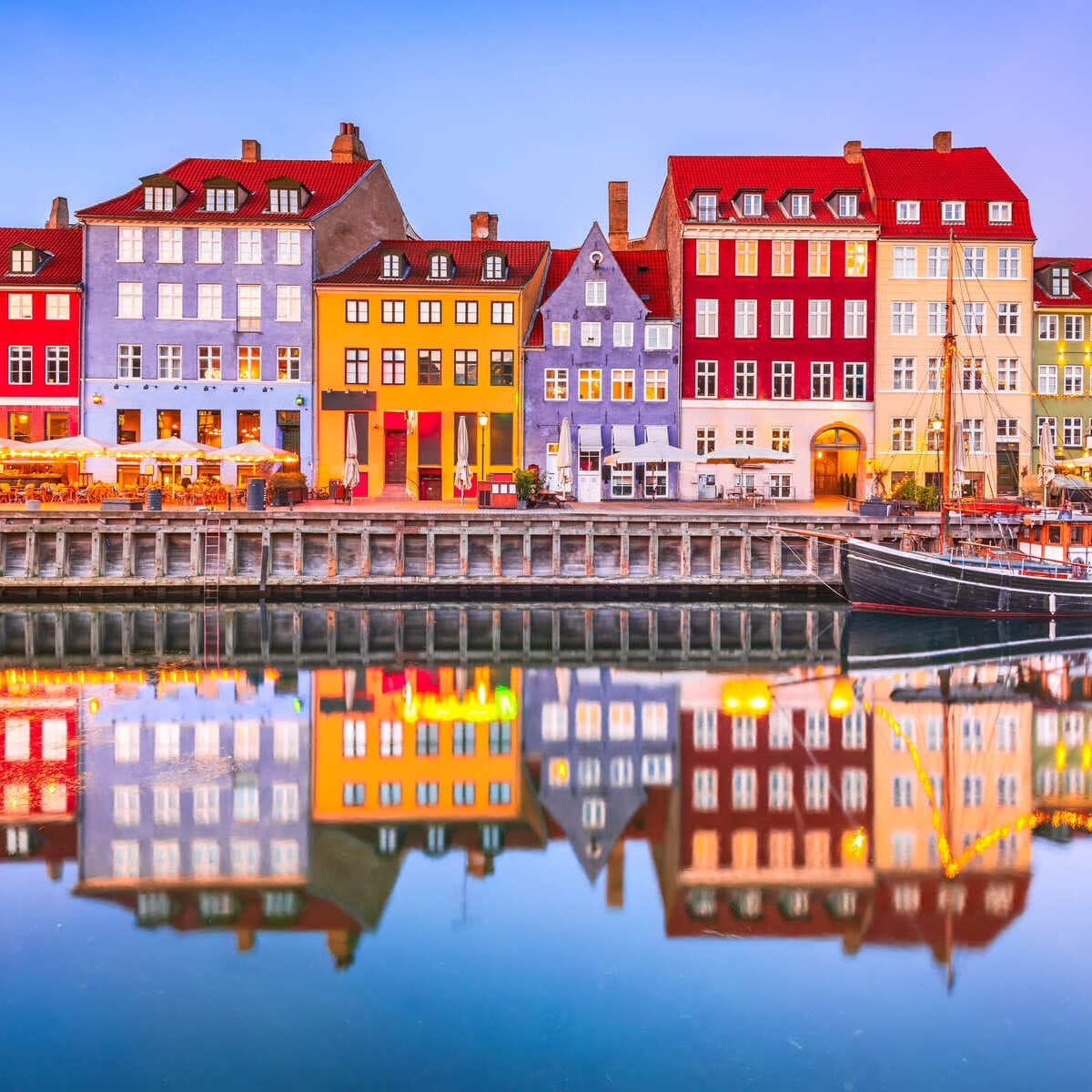
Other than boasting a high-trust society, effective policing, and low levels of corruption, security experts have pointed to Denmark’s immigration policy as the primary reason for the country’s higher levels of safety, especially compared to neighboring Sweden.
Despite being led by a left-leaning government, Denmark has enacted a series of measures to discourage illegal entrants, including actively fighting the formation of ‘ghettos’, tightening rules for asylum claims, and repatriating foreign criminals.
Religious extremism remains a concern nationwide, and that’s why the U.S. Government has yet to place Denmark at the desired Level 1 in its Travel Advisory, but the good news is Americans are not exactly discouraged from traveling there. They must simply beware of potential terror threats.
Finland
Safety Index: 90.6

Despite being neighbors with Russia, a country waging war against a close ally of the Western World, Finland is one of the most stable states in the region: though it’s not immune to Russian provocations, it’s managed to steer clear of direct involvement in the conflict so far, and national security remains tight.
On the public safety front, violent crime and other forms of petty crime, such as theft and burglary, are extremely rare, even in large urban centers like Helsinki and Tampere, and most cities are clean and well-lit during winter and benefit from effective policing.
Even more so than Denmark, the concept of a high-trust society here applies to the letter: people trust each other and institutions, kids walk to school alone, lost wallets are usually returned with any money and credit cards left as they were, and good faith is just part of daily life.
Norway
Safety Index: 90.85

Consistently ranked one of the world’s most peaceful states, Norway is known for its majestic nature, rich Nordic heritage, and of course, enviable levels of public safety and political stability—attributes most of Europe can only aspire to.
Unlike neighboring Sweden, where gun crime increased significantly in recent years, Norway remains largely unaffected by the security concerns seen elsewhere in the Scandinavian Peninsula, and in fact, statistics for most crimes remain ‘low’, as seen on Numbeo.
Be it in the lively capital city of Oslo, the up-and-coming Bergen, out in the Western Fjords, or in any quaint settlement tucked away in some lush Norwegian forest, your risk of being mugged, falling victim to a burglary, or other acts of violence is negligible.
Switzerland
Safety Index: 91.1

Neutral as countries can be, and proudly so, Switzerland is an oasis in the heart of Europe that continues to boast impressive levels of safety, despite being surrounded by nations that have let the ball drop: we’re talking France, Germany, Italy, and to a certain extent, even Austria.
In this new study, it ranks at number 2 for safest in both Europe and the world, in alignment with the official U.S. travel advice, which considers it a ‘low-risk’ destination for Americans, and the reasons why are pretty straightforward and well-documented:
Most residents have good incomes, thus there are fewer crime incentives. The police are highly professional and able to quash threats as they arise. The decentralized government helps communities tackle regional issues upfront. Plus, it has stricter immigration and residency rules compared to its counterparts.
Iceland
Safety Index: 92.4

Any country that leaves its babies out to take a nap on the curbside unsupervised is mostly made up of sparsely populated wild territory, and where the capacity of the prison system stands at 160, because the demand just isn’t there, is bound to take the number one spot.
Iceland is Europe’s safest country by a long mile, as well as the world’s most secure state. Having been to Reykjavik ourselves, multiple times, we can vouch for the Icelandic capital’s impressive state of peace, and they don’t even need police doing the rounds to keep it that way:
The overwhelming majority of Iceland’s residents are law-abiding citizens, malfeasance is extremely uncommon, and strongly frowned upon, be it in personal relations or at the Government level, and overall, Iceland is too remote, too pacate, too small a nation (population-wise) to garner any bad actors.
Check The Expert Travel Advice That Applies To Your Destination For Free
Heading to Europe this season and unsure what the security situation at your destination is like at the moment?
Make sure you check our U.S. Travel Advisory Checker for the latest advice, based on the U.S. Government’s own guidance. Simply type in the name of the country you’re traveling to, and fetch the information you need without the usual fluff, in easy-to-understand language.
Oh, and have we mentioned it’s free to use?
The Travel Off Path Advantage: Your Travel Toolkit
Subscribe To Our Latest Posts
Enter your email address to subscribe to Travel Off Path’s latest breaking travel news, straight to your inbox.
